Is there a Religious Importance of Marriage?
📅 2026 Update: Recent Changes in U.S. Marriage Law
Since the original article was published, there have not been significant changes in U.S. marriage law from 2024 to 2026. However, some aspects, such as marriage services and their accessibility, continue to evolve. The earlier article below provides a solid foundation for understanding these laws.
📜 1. Overview of Marriage Certificates
Marriage certificates remain crucial legal documents that confirm a marriage. Couples still obtain them from the vital records office in their state or county. The requirements for obtaining a certificate, such as identification and fees, have not changed significantly since earlier discussions.
- 🗂️ Application: Couples must apply in person or online, depending on local regulations.
- 💵 Fees: Fees can vary, but they typically remain in the $20 to $100 range.
💬 2. The Role of Marriage Counseling
Marriage counseling is still recognized for its effectiveness in improving relationships. While costs vary, many resources have emerged, providing free or low-cost options to couples.
- 🌟 Accessibility: Nonprofits and community centers increasingly offer sliding-scale fees for those in need.
- 🔍 Effectiveness: Research continues to show that couples who engage in counseling often report improved satisfaction.
📝 3. Importance of Marriage Licenses
The process of obtaining a marriage license remains consistent. Couples must apply through their local county clerk’s office, meeting certain requirements.
- 📅 Waiting Periods: Some states still impose waiting periods, which can range from one day to several weeks.
- ⏳ Expiration: Licenses typically remain valid for a specific period after issuance, often between 30 to 90 days.
💼 4. Prenuptial Agreements
Prenuptial agreements are still widely used to protect assets in the event of divorce. These documents must meet specific legal criteria to be enforceable.
- 📄 Disclosure: Many states require full asset disclosure for the agreement to hold up in court.
- 🤝 Voluntary Signing: Both parties must enter the agreement willingly, without pressure.
📌 5. Key Points Summary
- 📝 Certificates: Marriage certificates confirm legal unions.
- 💬 Counseling: Effective counseling remains accessible through various venues.
- 📜 Licenses: Marriage licenses have specific requirements and waiting periods.
- 💼 Prenuptials: Prenuptial agreements need full disclosure and voluntary signing.
💡 Tips for Navigating U.S. Marriage Laws
Review the details of your situation with an attorney. Understanding the specifics can clarify your options and rights.
📜 1. Understand Local Laws
Marriage laws can vary significantly by state. Couples should familiarize themselves with local regulations regarding marriage licenses and requirements.
💬 2. Explore Counseling Options
Consider both free and paid marriage counseling options. Many organizations provide valuable resources that couples can use to strengthen their relationships.
📝 3. Obtain a Marriage License Early
To avoid last-minute stress, apply for your marriage license well before your wedding date. This ensures you have ample time to meet any waiting periods.
💼 4. Discuss Prenuptial Agreements
If you are considering a prenuptial agreement, discuss it openly with your partner. Transparency about finances can prevent misunderstandings later.
💵 5. Budget for Costs
Create a budget that includes all costs associated with obtaining a marriage license and counseling. Knowing the financial implications can help manage expectations.
⚖️ 6. Know Your Rights
Familiarize yourself with your rights regarding property and inheritance. Understanding these can provide peace of mind in both marriage and potential future disputes.
🏆 Top Services Ranked by User Reviews (2026)
This section covers various services related to marriage and legal documentation, such as marriage certificates. The following rankings are based on Trustpilot data collected in October 2026. Ratings can change, and while they are helpful, they are just one aspect of customer feedback.
🥇 1. VirtualMarriage
VirtualMarriage has been rated 4.9. It is known for providing online marriage services and legal marriage certificates. Reviewers appreciate the convenience of remote access but note occasional operational problems that may arise.
🆓 Free Government and Nonprofit Options
Many states offer free marriage license applications through government offices. Nonprofit organizations also provide free marriage counseling services, making essential support accessible to couples seeking help.
🔎 Comparison Points
- 📝 Service Type: Look for services that provide the specific documents or counseling you need.
- 💵 Cost: Compare prices and check for any hidden fees.
- 🌟 User Reviews: Pay attention to overall ratings and what users specifically mention in their feedback.
- 🕒 Processing Time: Consider how long it takes to obtain necessary documents or schedule counseling sessions.
❓ Frequently Asked Questions
❓ What is the difference between a marriage certificate and a marriage license?
A marriage certificate is an official document that proves a marriage took place. A marriage license, on the other hand, is the legal authorization to marry.
📝 How do I apply for a marriage license?
To apply for a marriage license, couples typically need to visit their local county clerk’s office. They will need valid identification and may need to pay a fee.
💬 Can I get a marriage license if I'm not a resident of the state?
Yes, many states allow non-residents to apply for a marriage license, but specific requirements may vary. Couples should check the regulations in the state where they plan to marry.
📄 Do prenuptial agreements need to be notarized?
While notarization is not always required, having a prenuptial agreement notarized can add an extra layer of legitimacy. It is advisable to consult local laws for specific requirements.
💼 What rights do spouses have regarding healthcare decisions?
In most states, spouses have the right to make medical decisions for each other if one partner is incapacitated. This is an important consideration when planning for health-related issues.
📅 How long does a marriage license last?
Marriage licenses typically have an expiration date, often ranging from 30 to 90 days after issuance. Couples should check their local regulations for specific timeframes.
⚖️ Recent Court Cases Related to Marriage Law
Recent court rulings have continued to shape the landscape of marriage law in the U.S. These cases address various topics, including the validity of prenuptial agreements and spousal rights.
- Florida court affirms ruling in Soto divorce caseDistrict Court of Appeal of Florida · June 3, 2020
- Florida court affirms ruling in Evans divorce case appealDistrict Court of Appeal of Florida · May 28, 2020
- Florida court affirms ruling in Verma divorce caseDistrict Court of Appeal of Florida · May 22, 2020
- Florida court affirms ruling in Mincey divorce caseDistrict Court of Appeal of Florida · June 24, 2020
For more recent rulings, check out more rulings on the news page.
End of October 2026 Update
Many times, religion plays a large role in marriage. In fact, religion often plays a role in the relationship before the marriage even takes place. In some cases, couples take part in religious premarital counseling. This counseling is meant to ensure that couples are fully aware of the implications of religion in their marriage. In addition, religious marital counselors will offer the couple advice on keeping religion as a priority during marriage.
This is especially necessary in times of conflict or distress for the couple. Counseling helps couples learn to utilize religious tools for conflict resolution in order to bring each other closer together in the face of diversity. In some cases, couples involve individuals of two different religious faiths.
On occasion, one spouse may be converting to the other spouses religion before marriage. In that case, religious counseling will help that individual by imparting specific religious teachings to introduce them to the church. Often, conversion takes place before the wedding, so that the ceremony is focused on just one faith. Spouses sometimes convert so that children can be raised in one religion, helping parents to avoid conflict and confusion. However, some couples maintain separate religious faiths and take part in an interfaith wedding ceremony.
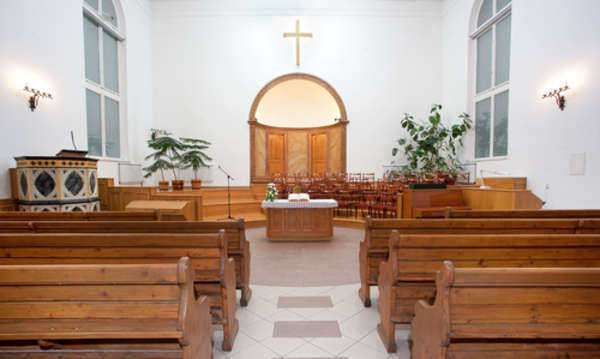
Either way, premarital religious counseling is often a requirement for couples wishing to be married in a church. Religion often plays a large role in the wedding ceremony as well. There are often prayers included in the ceremony. In fact, several prayers are usually included in the wedding ceremony, in order to bring the congregation together with God. In addition, there are many traditional and symbolic acts that take place during a religious wedding ceremony.
Those often include readings from specific religious texts. Many times, close friends and family members will take part in reading those texts to the wedding guests, while focusing their reading on the couples future together. Each religion will offer specific traditions an symbolism for a wedding ceremony. For couples choosing a religious wedding, those traditions are meant to strengthen their bond with each other their faith. Many times, couples have some input as to which traditions are present during their ceremony. In any case, religious wedding ceremonies represent the couples new life together, while reinforcing their faith.
Background:
Religious marriages have a background rich in tradition and symbolism. Often that tradition becomes evident during the marriage ceremony. Each religion will have specific traditions that take place during the ceremony in order to represent the couples mutual respect for religion and religious principles as they apply to the relationship.
Many traditions have been utilized for centuries. Those traditions represent real life applications of the religious teachings that take place during the ceremony. In general, the religious elder that officiates over the ceremony, will speak about harmony between the couple and their faith. Religious teachings often involve supportive evidence though specific readings of religious texts.
Many times, religious wedding ceremonies involve religious songs. Sometimes, guests participate in the music, and other times the music is performed for the crowd. In general, religious weddings require that guests take part in symbolic gestures, such as kneeling in prayer on behalf of the couple.
Christianity:
Christian weddings involve many religious traditions that have been practiced for centuries. While there are some variations in Christian wedding ceremonies, most contain the same core elements. Many Christian couples take part in premarital religious counseling in order to become better prepared for the marriage bond.
In fact, couples learn how to confront difficulties in their relationship through a reliance on their faith and in God. In addition, couples learn about the symbols that will be included in their wedding ceremony. Couples will find these traditions to be more significant when they can appreciate the symbolism behind them. In some cases, couples may choose to write their own vows. Often, their religious counselor will help so that couples can come to terms with putting their feelings into words.
During a Christian wedding ceremony, there are many prayers in which individuals take part. Those prayers include blessings for the couple, as well for their guests. It is believed that collective prayer is more powerful than individual prayer. However, there is sometimes a moment of silence so that people can say a silent, personal prayer.
This helps guest to be included in the union and for guests to offer collective support to the couple's marriage. In some Christian wedding ceremonies, couples and their guests break bread and drink wine to signify the body and blood of Christ. This is to remind the congregation of God's sacrifice in order to offer them salvation. In many ways, a Christian wedding is like church services, with the addition of wedding vows between the couple. Yet, it is not likely that all guests will be of a common religious faith. Guests are expected to participate out of respect for the couple and their faith.
Judaism:
Jewish wedding ceremonies are steeped in religious tradition. There are many symbolic gestures that take place during the ceremony. The meanings behind those gestures are meant to be carried into the marriage. In Jewish marriages, the woman in considered to be the head of household and the man is required to care for her needs.
In addition, men can be of a different religious faith, but children are expected to be raised in the religious tradition of the mother. There are many symbolic gestures that take place during the Jewish wedding ceremony, and couples are expected to be aware of their significance to the marriage contract. In the past, engagement ceremonies often took place a year before the wedding ceremony.
However, many couples now combine the two ceremonies. Couples take part in symbolic gestures to represent their agreement to take part in the marriage contract. In fact, the Rabbi will read the religious marriage contract aloud to reinforce the ideas of spousal responsibility for each other and to the community.
The Jewish marriage contract is very specific in regards to the husband's responsibility for meeting all of his wife's needs. If in fact, if the man cannot care for her as he is required, he is instructed to divorce her. However, the man is still required to care for most of his bride's needs even after the divorce. Jewish marriages are based on mutual caring and respect, in addition to the observance of religious practices.
Islam:
Muslim weddings often include many similar traditions utilized before, during and after the ceremony. First, couples must mutually agree to take part in the marriage. In some cases, the couple's representatives, usually family members, may agree to the marriage on behalf of the couple.
The marriage is generally accepted after a gift or token has been presented to the bride's family. In fact, that gift is used to ask the bride's family for her hand in marriage. The tradition of asking the bride's family for permission is found among many religions. It is utilized to show respect for the bride's family. Before a Muslim wedding takes place, the couple makes a public declaration of their acceptance of the wedding contract.
That proclamation must take place in front of at least two witnesses. The Muslim wedding ceremony is full of many symbolic religious traditions that bring focus to the religious elements involved in the marriage contract. Like many religions, Muslim men are required to attend to the needs of their wives. In Muslim marriages, there is a mutual understanding of the importance of faith in the relationship. In fact, the focus of all Muslim marriages is on religious principles and teachings as they pertain to individuals and to the couple.